
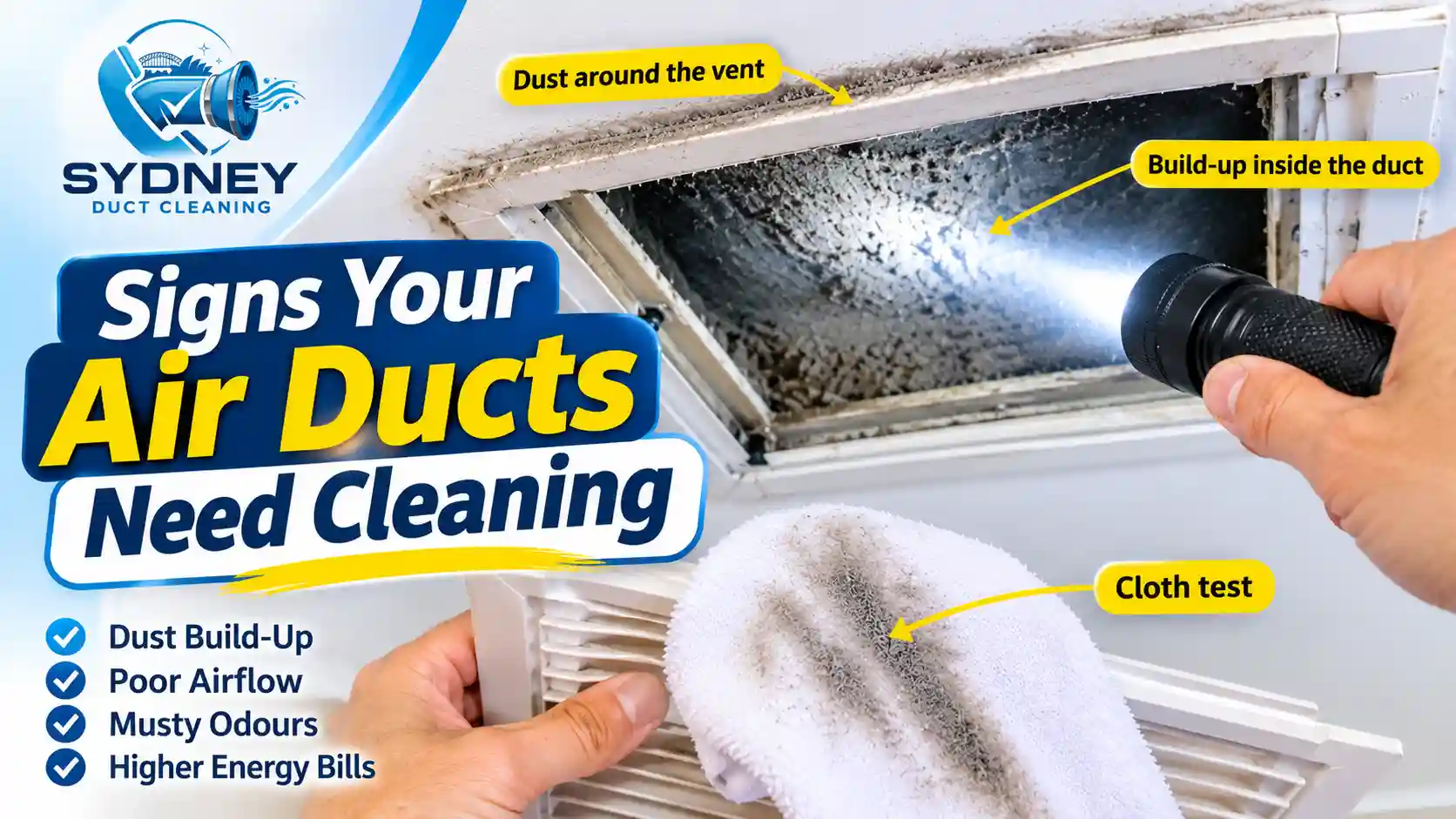
The clearest signs your air ducts need cleaning are a musty smell when the system starts, dust blowing out of the vents, weak or uneven airflow, visible mould around the vents, and allergy symptoms that get worse when the aircon runs. If you notice two or more of these, the ducts are the first place to look.
Your ducts are hidden in the roof or under the floor, so most people never see inside them. Every time the system runs, it pulls air from your rooms, pushes it through the ducts and back out through the vents. Over the years, dust, pollen, pet hair and moisture build up on the inside walls.
This guide covers the ten signs to watch for, a simple check you can do yourself, and when it is time to call a professional.
“Most people only think about their ducts when something smells wrong. By then the build-up has usually been there for years. The signs show up early if you know where to look.” — The Sydney Duct Cleaning team
Signs Your Air Ducts Need Cleaning at a Glance
| What You Notice | What It Usually Means | What to Do |
| Musty smell when the aircon starts | Mould or damp dust in the ducts | Check the vents, book an inspection |
| Dust blowing out of the vents | Debris built up inside the ducts | Replace the filter, book a clean |
| Weak or uneven airflow | Blockage, dirty filter or damaged duct | Check filter and vents first |
| Black or green spots on vents | Mould growth | Do not dry-brush it, book a clean |
| Allergies worse with the aircon on | Dust, pollen or mould circulating | Clean the ducts and change the filter |
| Home gets dusty very quickly | Dust pushed out by the system | Inspect return grille and ducts |
| Dust after building work | Construction dust in the ducts | Clean after the work finishes |
| Droppings or nesting material | Pest activity in the roof space | Pest control first, then clean |
1. A Musty or Stale Smell
A damp, earthy or stale smell when the system starts up is the most common sign. It usually means dust and moisture have combined inside the ducts or on the coil, and mould or bacteria have started to grow. The smell is often strongest in the first few minutes, then fades as the air moves.
Sydney’s humid summers make this worse. Warm, damp air meeting cool duct surfaces creates condensation, and dust that is already sitting in the ducts holds that moisture.
Technician tip: Smell the air at a vent right as the system starts, not after it has run for ten minutes. The first burst of air tells you the most.
2. Dust Around or Blowing From the Vents
Look at your vents. If you see a grey fringe of dust around the edges, or you can see dust drifting out when the system starts, the ducts behind them are loaded. Dust that collects on a vent cover came from somewhere, and that somewhere is inside the duct.
A fresh filter does not fix this. The filter only protects the system from dust arriving through the return side. It does nothing about dust that has already settled inside the supply ducts.
3. Weak or Uneven Airflow
If some rooms feel cool and others barely get any air, or the whole house seems weaker than it used to be, something is restricting airflow. It can be a blocked filter, a closed damper or a damaged duct, but a thick layer of build-up inside the ducts can also narrow the space the air has to move through.
Start with the easy checks. Make sure the vents are open, nothing is blocking the return grille, and the filter is clean. If all of those are fine and the airflow is still poor, the ducts need a proper inspection.
4. Visible Mould on or Near Vents
Black, green or grey spots on a vent cover, or on the ceiling or wall around it, are a clear warning. Mould on the outside usually means moisture and spores are present inside the duct as well.
Do not dry-brush or vacuum visible mould. That can throw spores into the air and spread the problem across the room.
Technician tip: Mould around a vent can also come from a leaking roof or condensation on an uninsulated duct in the ceiling. A technician can tell you which, so the problem does not come straight back after the clean.
5. Allergy or Asthma Symptoms Get Worse
If sneezing, itchy eyes, a blocked nose or a tight chest get worse when the aircon is running, and ease when you go outside or turn the system off, dirty ducts may be part of the cause. Dust, pollen and mould spores that settle in the ducts are pushed back into the room each time the system starts.
A duct clean can reduce what circulates through the home, but it is not a cure. If symptoms continue, speak to your doctor. Asthma Australia also has useful guidance on managing triggers at home.
6. The House Gets Dusty Too Quickly
You dust on Saturday and the shelves look grey again by Wednesday. A little dust is normal, but if it returns very fast, especially near the vents, the system may be recirculating dust from inside the ducts or through a poorly sealed return.
7. You Have Had Building Work Done
Renovations create fine dust from sanding, cutting and demolition. If the ducted system ran while the work was happening, or the vents were not sealed, that dust went straight into the ductwork. Even with covers on, fine dust finds its way in.
The best time to clean is after all the work has finished, including painting. Cleaning before the work is done means the ducts get dirty again.
8. Signs of Pests
Roof spaces in Sydney are popular with rats, mice, possums and insects. Droppings near vents, scratching sounds from the ceiling, nesting material, or a sharp animal smell from the vents all point to pest activity near the ducts. Sometimes pests chew through flexible ducts and leave them damaged.
Deal with the pests first. Cleaning the ducts while pests are still active in the roof space is a waste of effort.
9. You Do Not Know When They Were Last Cleaned
Moving into a home with ducted air conditioning is a good moment to ask when the ducts were last cleaned. If nobody can tell you, assume they have never been done. Ducts that are 10 or 15 years old and have never been cleaned often hold more build-up than people expect.
10. The System Is Working Harder Than It Should
If the aircon runs for much longer than it used to to reach the same temperature, restricted airflow could be the cause. Dirty ducts make the fan work against more resistance, and rooms at the far end of the system receive less cool air. Dirty ducts are not the only reason for this, so a technician will also check the filter, coil and refrigerant.
A Quick Check You Can Do Yourself
You can get a rough idea of the condition of your ducts in about ten minutes:
- Switch the system off at the wall.
- Remove a supply vent cover. Most unclip or have two screws.
- Shine a torch into the duct and look at the inside walls. Heavy dust, fuzzy grey build-up or dark spots are a bad sign.
- Check the return air grille and filter. A thick grey coating on the filter shows how much dust the system is pulling in.
- Run a clean white cloth along the inside of the vent opening. Grey or black marks mean there is build-up further in.
- Smell the duct. Any musty or stale odour is worth noting.
Technician tip: Take a photo with your phone before you replace the cover. It gives the technician a good idea of the condition before they arrive.
Dirty Vents or Dirty Ducts
Wiping the vent covers is not the same as cleaning the ducts. Cheap or rushed services sometimes only wipe the grilles and call it a clean. A proper duct clean works on the inside of the whole duct run, from the return to every supply vent.
| Task | Vent Wipe | Professional Duct Clean |
| Cleans the vent cover | Yes | Yes |
| Cleans inside the duct runs | No | Yes |
| Removes built-up dust and debris | No | Yes |
| Inspects for damage or leaks | No | Yes |
| Treats mould in the ducts | No | Yes, where needed |
| Improves airflow | No | Often |
What Happens During a Duct Clean
A professional duct clean follows a clear process. Our air duct cleaning service covers these steps:
- Inspection: The technician checks the system, the vents, the return and the accessible ductwork.
- Protection: Floors and furniture near vents are covered, and the system is switched off.
- Agitation and extraction: Rotary brushes and air tools loosen the build-up, and a powerful vacuum pulls it out of the system.
- Vents and return: All grilles and covers are removed, cleaned and refitted.
- Treatment: If mould or bacteria is present, an approved sanitising treatment is applied.
- Filter and test: The filter is cleaned or replaced, and the airflow is tested before the technician leaves.
Sydney Conditions That Load Your Ducts
Some local conditions mean Sydney ducts collect build-up faster than people expect:
- Humid summers: Moisture and dust combine into a damp film that mould likes.
- Spring pollen: Pollen enters through open windows and the return air, and settles in the system.
- Smoke: Smoke from bushfires and hazard reduction burns carries fine particles into homes.
- Dust in the west: Western Sydney suburbs see more dust from dry, windy conditions and nearby construction.
- Hot roof spaces: Roof cavities can reach 50 degrees or more on hot days, and heat ages flexible ducts and insulation.
How Often Should Ducts Be Cleaned
| Situation | Recommended Timing |
| Typical home, no health concerns | Every 2 to 3 years |
| Pets, smokers or allergy sufferers | Every 1 to 2 years |
| Just moved in, history unknown | Soon after moving in |
| After renovation or building work | After the work is complete |
| Visible mould or a persistent musty smell | As soon as possible |
| Commercial offices and shops | Based on usage and building needs |
When Cleaning Is Not Enough
A clean can only fix dirt. Some problems need a repair or a different solution:
- Crushed, torn or disconnected flexible ducts in the roof space need repair or replacement.
- Mould caused by a roof leak or condensation will return unless the moisture source is fixed.
- Poorly insulated ducts can sweat in summer and need better insulation.
- In older homes, built before the late 1980s, do not disturb old insulation or board-type ducts in the roof space yourself. Ask a technician about the material before any work begins.
Book a Duct Clean in Sydney
Sydney Duct Cleaning serves homes and businesses across Greater Sydney, from the Inner West to the Northern Beaches and from the Eastern Suburbs to Western Sydney. Our residential air duct and commercial air duct services cover ducted systems of every size. If your system also needs a new filter, our air filter replacement service can be done at the same visit. Call (025) 7601 912 or send a quote request through the website.
Frequently Asked Questions
1. Do I really need to clean my air ducts?
Not every home needs it on a fixed schedule, but if you notice any of the signs above, or you have never had them cleaned, an inspection is worth doing.
2. Can duct cleaning help with allergies?
It can reduce the dust, pollen and mould that circulate through your home, which helps some people. It is not a medical treatment, so speak to your doctor if symptoms continue.
3. How long does a duct clean take?
A typical home takes a few hours, depending on the number of vents, zones and how easy the ducts are to reach.
4. Can I clean my own ducts?
You can wash the filter and wipe the vent covers. The inside of the ducts needs professional equipment, and working in a roof space can be unsafe without training.
5. Is it safe to keep using the aircon with dirty ducts?
In most cases yes, but you may be circulating dust and odours, and the system may work harder. If you can see mould, switch the system off until it has been checked.
Conclusion
The signs your air ducts need cleaning are easy to spot once you know them: musty smells, dusty vents, weak airflow, visible mould and allergies that flare when the aircon runs. Do the ten minute check, and if the ducts look dirty, book a professional clean.