
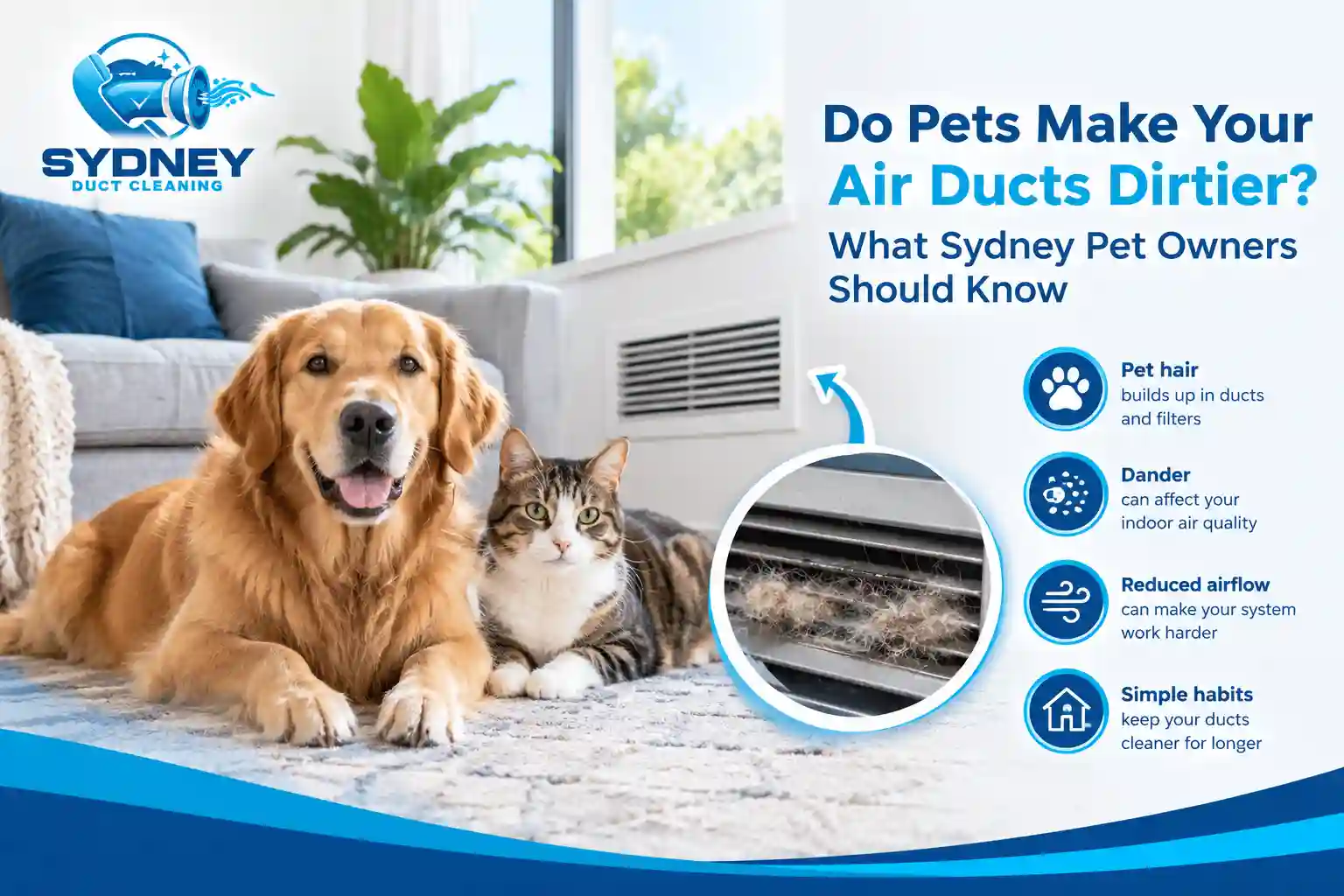
Yes, to a degree. Dogs and cats add hair, dander and tracked-in dirt to your home, and some of that ends up in a ducted aircon system. The effect is usually modest in a home with one calm cat. It’s much more noticeable with a couple of shedding dogs, a system that runs for hours every day, and filters that are rarely checked.
The good news is that most of the problem is manageable with a few habits, and you don’t need to panic about your ducts or clean them on a fixed schedule just because you have a pet. Here is what pets actually add, where it collects, and what’s worth doing about it.
What pets add to your ducts
Three different things are involved, and they behave differently:
- Hair and fur. It’s large and visible. It collects on grilles and filters, and mats together with dust.
- Dander. This is microscopic flakes of skin. It’s light, stays airborne for a long time, and settles in places where air slows down, which includes parts of ductwork. Many people who think they’re allergic to pet hair are actually reacting to dander.
- Dirt and debris. Pets carry in soil, pollen, grass seeds and dust on their coats and paws. Cats also add fine dust from litter.
Where it ends up
The return-air grille and filter. In a ducted system, the return grille pulls air from the house back to the unit, and the filter sits behind it. This is where most hair is caught. In a home with shedding pets, the filter clogs noticeably faster than it would otherwise.
The area around the return duct. Hair and dander that slip past the filter, or arrive when a filter is missing or damaged, settle on the inside of the return duct and on the indoor coil.
The supply vents. These push air out, so they collect less hair than the return, but dust and dander can still settle around them, and pets that lie near floor vents can leave fur on them.
If you have a split system rather than ducted aircon, the same principle applies to the filters in the indoor unit, though there are no ducts to worry about.
Why it matters
Reduced airflow. A filter loaded with fur restricts the air moving through the system. Rooms cool or heat less well, and the unit works harder to make up for it.
Smells and moisture. Hair and dander can mix with the moisture that forms during cooling, creating damp mats that smell. Sydney’s humid summers make this more likely, and that musty or “wet dog” smell on start-up is a common complaint.
More circulating dust. When the system runs, it can push settled dander and dust back into rooms. Anyone sensitive to dust may notice symptoms when the system starts.
Signs it’s building up
- Visible fur or grey dust mats on the return grille, or the filter looks clogged within a few weeks of cleaning it
- A musty, damp or “doggy” smell when the system starts
- Fur or dark dust around the supply vents
- Weaker airflow than before in some rooms
- Sneezing, itchy eyes or other symptoms that seem to get worse when the system runs
Treat the last one as a clue and not proof. Many things cause those symptoms, including pollen, mould and dust mites, and a doctor is the right person to ask if they’re a concern.
Dogs, cats and other pets: does it make a difference?
It does, though not always the way people expect.
Dogs. Heavy shedders, such as many long-coated and double-coated breeds, produce the most visible hair. Dogs also spend time outdoors and carry in dirt, grass seed and pollen on their coats, which adds to the dust the system pulls in.
Cats. They tend to shed less visible hair, but they groom constantly and produce a lot of fine dander. Litter dust adds to it. Cats also love warm spots, and that can include the area around a floor vent.
Birds and small animals. Birds shed feather dust, and rabbits and guinea pigs shed fine fur and carry hay dust. Even a small pet kept indoors can add to the load.
A hairless or low-shedding breed doesn’t remove the issue entirely, because all of these animals produce dander. It can reduce the amount of visible fur, but you still need to look after the filters.
Why Sydney homes tend to feel it more
A few local factors make the pet effect more noticeable here than it might be elsewhere:
- Long running hours. In hot spells, ducted systems can run most of the day, so more air, and more hair and dander, moves through the system.
- Humidity. Damp air helps fur and dust stick together and makes smells more likely.
- Pets indoors in the heat. On very hot days, animals come inside to the cool air, and so does their shedding.
- Roof-space ducts. Most ducted systems run through hot roof spaces, where condensation and warm air can encourage damp buildup if the system is already dusty.
What helps most
These steps are listed roughly in order of how much they help for the effort.
- Check the filter more often. In a household with shedding pets, looking at the filter every few weeks is sensible, and cleaning or replacing it when it’s coated. Our air filter replacement page explains the options.
- Vacuum the return grille. A brush attachment takes a minute and stops fur from getting pulled into the system.
- Brush your pet regularly, outdoors if possible. Less hair shed indoors means less in the system. Brushing outside keeps the loose fur and dander out of your lounge room.
- Wash bedding and soft furnishings. Pet beds, throws and cushions hold a lot of dander, and washing them often reduces what gets stirred into the air.
- Vacuum carpets and rugs frequently. A vacuum with a good filter helps, because a poor one puts dander straight back into the air.
- Keep pets off the vents. Floor vents and return grilles are warm or cool spots that animals love to lie on.
- Expect seasonal changes. Many dogs shed more as the seasons turn, so be ready to check the filter more often when you see more fur around the house.
Don’t forget the outdoor unit
Pets can affect the outdoor unit too. Dogs sometimes mark it, and urine can corrode metal parts over time. Fur can also collect on the fins. Keep a clear space around the unit, and discourage pets from using it as a favourite spot.
When duct cleaning makes sense in a pet household
You don’t need duct cleaning because you own a pet, but it’s reasonable to have the ducts inspected every one to two years if you have shedding animals, and to clean if the inspection shows buildup. It makes more sense sooner if you see any of these:
- Clumps of fur or dark dust inside the vents when you remove a cover
- A persistent damp or pet smell that doesn’t clear after cleaning the filter
- Airflow that’s weak even with a clean filter
- A system that ran for a long time with a missing or damaged filter
If you’d like to see what that involves, our air duct cleaning and residential air duct pages explain how a clean is done. If you book a visit, keep pets in a closed room away from the work area during the clean.
What duct cleaning can’t do
It’s worth being realistic. Dander settles on carpets, couches, curtains and bedding, and a duct clean doesn’t touch any of those. Cleaning ducts removes the hair, dust and dander that has built up inside them, which is a worthwhile improvement, but it won’t make a home with pets dander-free. If anyone in the house has allergies or asthma, ducts are one small part of the picture, and a doctor can give proper advice.
A rough guide by household
| Your household | Filter check | Duct inspection |
|---|---|---|
| No pets | Every couple of months | Every few years, or when there’s a reason |
| One cat or a low-shedding dog | Every month or so | Every two years or so |
| One or more heavy-shedding dogs | Every two to four weeks | Every one to two years |
| Several pets, or pets that sleep near vents | Every two to four weeks | Every year or two, plus whenever you notice smells or fur |
Treat these as starting points. How much hair your system collects depends on your pets, your home and how long the aircon runs, so adjust after you see how fast the filter clogs.
The takeaway
Pets add some hair and dander to your aircon system, and in a humid city like Sydney, that can lead to clogged filters, reduced airflow and musty smells. Most of it is caught at the filter and return grille, which makes those two spots the best place to focus your effort. Check the filter more often, vacuum the grille, groom your pet regularly and have the ducts inspected every year or two. That keeps pet hair from becoming a bigger problem than it needs to be.