
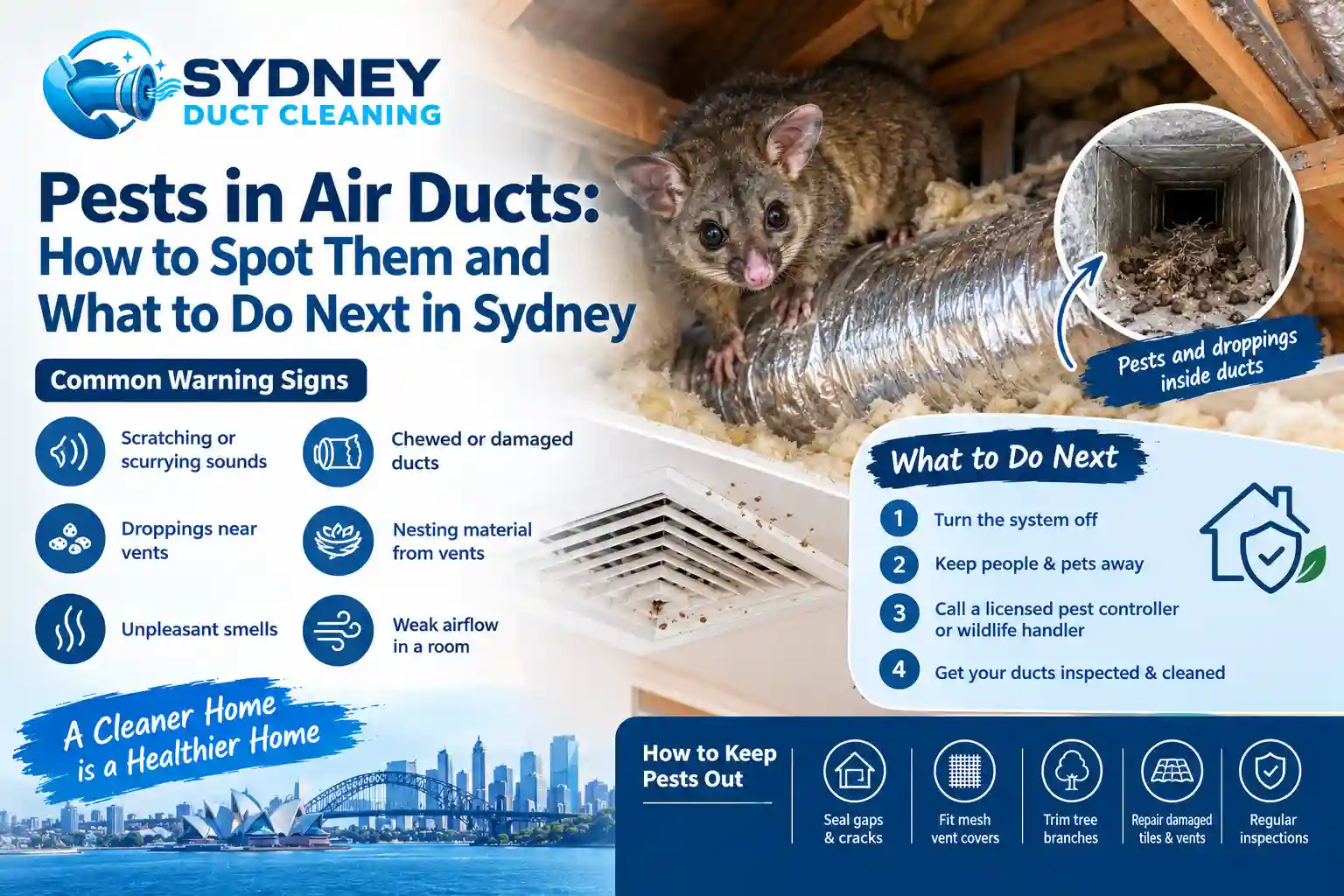
Short answer: if you hear scratching in the ceiling, smell something sour or rotten when the system runs, or find droppings near a vent, you may have pests in your air ducts. Switch the system off, keep away from the vents, and call a licensed pest controller or wildlife handler. Once the animals are gone, have the ducts inspected and cleaned.
It’s not a pleasant thought, but it’s more common than most people expect. Roof spaces are warm, dry and sheltered, and ducts run right through them. This guide covers the warning signs, what to do straight away, and how to stop it happening again.
Why Pests Get Into Air Ducts in Sydney
On a ducted system, most of the ductwork runs through the roof cavity. For a possum or a rat, that’s an ideal spot. It’s quiet, it’s out of the weather, and the insulation makes a comfortable nest.
The usual suspects in Sydney homes are:
- Possums. Common in tree-lined suburbs, and they get into roof spaces through gaps at the eaves or damaged tiles.
- Rats and mice. They squeeze through tiny gaps and chew flexible ducting and insulation.
- Birds. They nest in outdoor vents, exhaust outlets and roof ventilation.
- Insects. Ants, cockroaches and wasps can set up in vent covers and the outdoor parts of the system.
Flexible ducts are especially vulnerable. They’re thin and easy to chew through, and a damaged section can let animals move straight into the system.
6 Warning Signs of Pests in Your Air Ducts
- Scratching, scurrying or thumping in the ceiling. It’s often louder at dusk and during the night, when possums and rodents are most active.
- Droppings or stains near vents. Look around supply vents, the return grille and on the ceiling near them.
- A strong smell when the system runs. Urine has a sharp, musky odour. A dead animal gives off a sweet, rotten smell that gets stronger over a few days.
- Chewed, torn or collapsed ducts. If you can see into the roof space, look for damaged flexible ducts or shredded insulation.
- Nesting material or debris coming from vents. Bits of insulation, fur, leaves or paper blowing out of a vent are a clear warning.
- Weak airflow in one room. A nest or a collapsed duct can block the run to a single room.
Any one of these can have another cause, but two or more together usually mean it’s time for an inspection.
What to Do Straight Away
- Turn the system off. Running it can push droppings, hair and odours through your home.
- Keep people and pets away from the affected vents. Close the doors to the rooms if you can.
- Open windows to ventilate the room, especially if there’s a smell.
- Don’t poke, spray or vacuum into the vents. You could startle an animal or spread contamination.
- Work out what you’re dealing with. Noises at night often point to possums or rodents. Daytime noise can mean birds or insects.
- Call the right professional. This depends on the animal, as explained below.
Possums Are Protected in NSW
This catches a lot of people out. Native possums are protected in NSW, so you can’t harm them, and trapping and relocating them is restricted. If you suspect a possum, contact a licensed wildlife handler or a wildlife rescue group such as WIRES for advice. Rats, mice and insects aren’t protected, and a licensed pest controller can deal with them.
One warning for everyone: avoid poison baits in the roof space. An animal that eats bait can die inside the ceiling or the ductwork, and the smell can last for weeks.
Health Risks Worth Knowing About
Droppings, urine and nesting material can carry bacteria, and once they dry out, the dust can become airborne. When a duct system is running, that dust gets pushed into your rooms. If you need to clear anything yourself, a few basics help:
- Wear gloves and a properly fitted P2 mask.
- Ventilate the area first.
- Don’t sweep dry droppings or use a household vacuum.
- Wash your hands thoroughly afterwards.
If anyone in the home has asthma, allergies or a weakened immune system, leave the cleanup to a professional.
Why Removing the Animal Isn’t the End of It
Once the animals are gone, the problem isn’t finished. Droppings, urine residue, hair and nesting material usually remain inside the ducts, along with any contamination in the insulation. That’s what causes lingering smells and keeps dust and allergens moving through the house.
After removal, the ducts need to be inspected, cleaned and, where needed, sanitised. Damaged or contaminated sections often need repair or replacement, because cleaning can’t fix a chewed duct. Our air duct cleaning page explains how a proper inspection and clean works, and the residential air duct service covers homes with ducted systems.
What a Professional Inspection Looks For
- Damaged or chewed flexible ducts and loose or disconnected joints.
- Droppings, nesting material and stains inside accessible sections of ductwork.
- Contaminated insulation around the ducts that may need replacing.
- Entry points, like gaps at the eaves, damaged vents or unsealed roof penetrations.
- The filter and indoor unit, which can carry debris from the contaminated ducts.
It’s also worth replacing the filter once the work is done. If you’re unsure which one suits your system, our air filter replacement page covers the major brands. Choose filters rated to AS 1324.1, the Australian standard for air filters in ventilation and air conditioning systems.
How to Keep Pests Out of Your Ducts
Prevention comes down to blocking the way in and removing the reasons for animals to be there:
- Seal gaps at the eaves, roof edges and around pipes and cables.
- Fit mesh or vermin-proof covers over outdoor vents and exhaust outlets.
- Trim tree branches that touch or overhang the roof, since possums use them as ramps.
- Repair broken tiles and damaged roof vents promptly.
- Secure food waste and pet food, which attract rodents.
- Check the roof space once or twice a year, or have a professional do it.
Don’t forget the exhaust fans. Bathroom and kitchen exhaust outlets are another popular entry point, and a blocked or damaged flap lets birds and rodents in. Our exhaust fan cleaning page explains what a proper clean covers.
When It’s Urgent
Act quickly if you notice a dead-animal smell, droppings in living areas, or any pest activity while someone in the home is unwell. Switch the system off, ventilate, and call a professional. If the ducts were already dusty or the system hasn’t been looked at in years, our guide on how often to clean ducted air conditioning sets out a sensible routine.
A Simple Rule of Thumb
If you can hear it, smell it or see it, don’t run the system. Get the animal dealt with by the right licensed person first, then have the ducts checked and cleaned before you switch things back on. It takes a little longer, but it keeps what was in the ceiling out of your living room.