
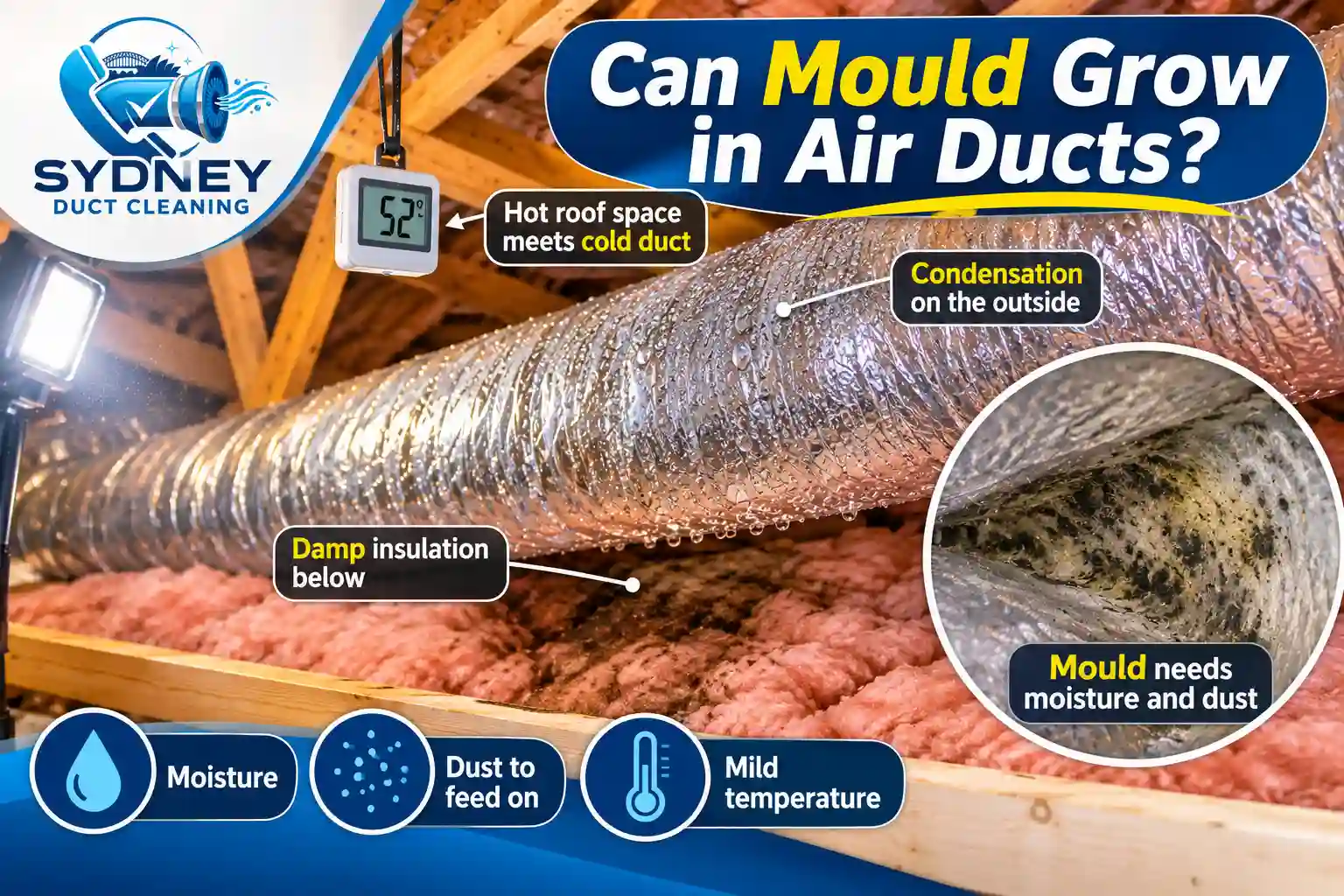
Yes, mould in air ducts is real, and it happens more often in humid cities like Sydney than most people expect. Mould needs three things to grow: moisture, something to feed on, and a mild temperature. Ducts already have plenty of dust to feed on and mild temperatures, so moisture is the missing piece. When a roof leak, condensation or a blocked drain supplies it, mould can take hold.
Because ducts are hidden in the roof or under the floor, mould can grow for months before anyone notices. This guide explains what causes it, how to tell mould from ordinary dust, what to do and what not to do, and how to stop it coming back.
“Mould in a duct is almost never just a cleaning problem. It is a moisture problem that shows up as mould. If you only clean it and leave the moisture, it comes back.” — The Sydney Duct Cleaning team
Mould in Air Ducts at a Glance
| Question | Short Answer |
| Can mould grow inside ducts? | Yes, when moisture meets dust |
| What does it need? | Moisture, dust to feed on and a mild temperature |
| Is it more likely in Sydney? | It can be, because of humid summers and hot roof spaces |
| How can you spot it? | Musty smell, spots on vents, stains on the ceiling |
| Can you clean it yourself? | Not inside the ducts |
| Will it come back? | Yes, if the moisture source is not fixed |
What Mould Needs to Grow in Ducts
Mould spores are everywhere, indoors and out. They only turn into a growing colony when conditions are right. Inside a duct system, those conditions are:
- Moisture: This is the deciding factor. Without damp, the spores stay dormant.
- Food: Dust, pollen, pet hair and skin flakes all collect on the inside of ducts, and mould feeds on all of it.
- Mild temperature: The air moving through a ducted system sits in a range that mould tolerates well.
- Still air in pockets: Corners, joins and the low points of ducts hold damp dust longer.
That is why a regular filter change and a duct clean matter. Less dust means less food, but only fixing the moisture removes the cause.
Where the Moisture Comes From
Moisture gets into duct systems in several ways. Finding which one applies to your home is the most important step:
- Condensation: Cold supply air in a hot roof space makes the outside of a poorly insulated duct sweat, and cool vents can sweat in humid rooms.
- Roof leaks: A small leak above a duct can soak the insulation for weeks without being seen.
- Blocked drain tray or drain line: The indoor unit produces water as it cools. If the drain blocks, water backs up and soaks the surrounding parts.
- High indoor humidity: Poorly ventilated bathrooms, kitchens and laundries push damp air into the home, and the return air carries it into the system.
- Leaky or damaged ducts: Gaps let humid roof space air get in, and torn insulation lets moisture reach the duct wall.
Technician tip: If you find mould near one specific vent, look at the ceiling above it. A stain or bubbling paint often points to a leak or a sweating duct in that exact spot.
Mould or Just Dust
Not every grey patch is mould. Dust is far more common, and it looks different. This table helps you tell them apart:
| Feature | Dust | Mould |
| Colour | Even grey or light brown | Patchy black, green, white or grey |
| Texture | Dry and powdery | Fuzzy, slimy or leaves a stain |
| Wipe test | Wipes off cleanly | Smears or leaves a mark behind |
| Smell | Little or none | Musty or earthy |
| Where it appears | Spread evenly | Near damp spots, joins and low points |
Where to Look for Mould in Air Ducts
You cannot see inside most of your duct system, but a few places give early clues:
- The edges and backs of supply vent covers.
- The ceiling or wall around each vent, looking for stains or spots.
- The first section of duct visible through a removed vent cover, using a torch.
- The return air grille and the filter behind it.
- The area around the indoor unit, where a technician can check the coil and drain tray.
- Ducts in the roof space, which should only be inspected by a professional.
Our guide on the signs your air ducts need cleaning includes a ten minute check you can do yourself.
Is Mould in Air Ducts Harmful
Reactions vary a lot from person to person. Some people notice nothing. Others get sneezing, itchy or watery eyes, a blocked nose, a cough, or asthma symptoms that flare when the aircon runs. People with asthma, allergies or weakened immune systems, and young children and older adults, tend to be more sensitive.
The colour of mould does not tell you how harmful it is, so any visible mould should be taken seriously. If symptoms keep returning, speak to your doctor. Asthma Australia has guidance on managing triggers at home.
What Not to Do About Mould in Ducts
The wrong response can make things worse. Avoid these:
- Do not dry-brush or vacuum visible mould with a household vacuum. It can spread spores through the room.
- Do not spray bleach or household cleaners into vents. They can damage components, leave fumes in the air you breathe and do nothing about the moisture.
- Do not use ozone machines or fogging products yourself.
- Do not paint or seal over mouldy surfaces.
- Do not keep running the system if there is heavy visible mould around the vents.
How Mould Is Removed From Ducts
A proper job treats the mould and the cause. Our air duct cleaning process for mould includes:
- Inspection: The technician checks the vents, return, accessible ducts, coil and drain tray, and looks for the moisture source.
- Protection: Floors and furniture near vents are covered, and the system is switched off.
- Extraction: A powerful vacuum with filtration pulls loosened debris out of the system rather than blowing it around.
- Agitation: Rotary brushes and air tools loosen mould and dust from the duct walls.
- Vents and return: All grilles and covers are removed, cleaned and refitted.
- Treatment: An approved sanitising treatment is applied where needed.
- Replacement: Sections that cannot be cleaned properly are replaced.
- Filter and test: The filter is replaced and the airflow is tested.
Technician tip: Insulated flexible duct is porous. If mould has soaked into the lining, it often cannot be cleaned properly and the section needs replacing. A good technician will tell you this honestly instead of cleaning something that will grow back.
Fix the Moisture or Mould Returns
| Moisture Source | Fix |
| Condensation on ducts or vents | Better duct insulation, a less extreme set temperature |
| Roof leak | Roof repair |
| Blocked drain tray or line | Clear and flush the drain |
| High indoor humidity | Exhaust fans, ventilation or a dehumidifier |
| Leaky or poorly sealed ducts | Seal and repair the ducts |
| Damaged duct insulation | Replace the damaged sections |
Sydney Humidity and Duct Mould
Sydney has several conditions that make duct mould more likely than in drier cities:
- Humid summers: Warm, damp air is exactly what condensation needs.
- Hot roof spaces: Roof cavities can reach 50 degrees or more, and cold air in a duct running through that heat creates condensation on the outside.
- Coastal and harbourside homes: Salt and moisture in the air add to the humidity load.
- Very low set points: Running the aircon at 16 to 18 degrees makes vents and ducts colder, so they sweat more. A setting between 23 and 25 degrees is gentler.
- Closed-up homes: Houses sealed tight against heat trap indoor humidity.
- Wet spells: Heavy rain can reveal roof leaks that soak insulation above the ducts.
How to Prevent Mould in Air Ducts
- Wash or replace the return air filter on schedule. A clean filter keeps dust out of the system.
- Keep indoor humidity below about 60 per cent. A small hygrometer shows the level.
- Run exhaust fans in bathrooms, the kitchen and the laundry.
- Fix roof leaks and sweating ducts as soon as you notice them.
- Keep the drain line clear by having the system serviced once a year.
- Have the ducts cleaned every two to three years, or sooner after renovations or a leak.
- Avoid running the aircon at very low temperatures for long periods.
How Urgent Is It
| What You See | What to Do |
| A musty smell and nothing else | Book an inspection in the next few weeks |
| A few spots on a vent cover | Book a clean soon and check the ceiling above |
| Widespread patches or ceiling stains | Switch the system off and call a technician |
| Breathing symptoms that flare with the aircon on | See your doctor and arrange a clean quickly |
| Mould after a roof leak or flood | Fix the leak first, then call for an inspection |
Book a Duct Clean in Sydney
Sydney Duct Cleaning inspects and cleans ducted systems across Greater Sydney. Our residential air duct service covers homes of every size, and our team can swap the filter at the same visit with our air filter replacement service. If you suspect mould, call (025) 7601 912 or send a quote request through the website, and our technician will check the system and the likely moisture source.
Frequently Asked Questions
1. Can mould grow in air ducts?
Yes. When moisture meets the dust that collects inside ducts, and the temperature is mild, mould can grow.
2. Does duct cleaning remove mould?
Cleaning removes the mould that is there. Fixing the moisture source is what stops it coming back, so both are needed.
3. Can I tell if there is mould in my ducts without opening them?
A musty smell, spots on vents, ceiling stains and symptoms that worsen with the aircon on are all clues. Only an inspection can confirm it.
4. Is black mould in ducts more dangerous?
The colour does not tell you how harmful it is. Any visible mould should be dealt with, and people react differently.
5. How quickly can mould grow?
In damp conditions, mould can start growing within a day or two and become visible within days to weeks.
Conclusion
Mould in air ducts needs moisture, dust and mild temperatures, and Sydney supplies all three in summer. Spot the signs early, do not disturb the mould yourself, and fix the moisture as well as cleaning the ducts. If you suspect it, book an inspection before the humid months settle in.