
Short answer: yes, usually, if the work was dusty and your ducted system was running or its vents weren’t sealed. Demolition, sanding, plastering, tile cutting and flooring all throw fine dust into the air, and ducted systems pull that dust straight in. If you only repainted a room with the vents covered, you can probably skip it.
The tricky part is that you can’t see inside your ducts. This guide helps you work out whether you need air duct cleaning after a renovation, what to look for, and how to protect your system next time.
Air Duct Cleaning After a Renovation: Do You Actually Need It?
It depends on the type of work and whether the system was protected. Use this table as a quick guide.
| Type of work | Likely to need a duct clean? |
|---|---|
| Demolition or knocking down walls | Very likely |
| Sanding, plastering or gyprock work | Very likely |
| Cutting tiles, concrete or stone | Likely |
| Pulling up or sanding floors | Likely |
| Kitchen or bathroom refit | Possibly, depending on how much dust was made |
| Roof or ceiling work near the ducts | Possibly, check for debris near vents |
| Painting only, with vents sealed | Unlikely |
| Dusty work, but system off and all vents sealed throughout | Unlikely, but check the filter |
How Renovation Dust Gets Into Your Ducts
A ducted system works in a loop. It pulls air in through the return air grille, passes it over the filter and coil, then pushes it back out through the vents in each room. If there’s a cloud of plaster dust in the house, the system doesn’t know the difference. It just moves it around.
Even with the system off, fine dust can drift into open vents and settle inside the ducts. Once it’s in there, it doesn’t stay put. Every time the system starts, a little of it gets blown back out, and the rest keeps building up on the filter, the coil and the drain tray. That’s why people often notice dust problems weeks or months after the builders leave.
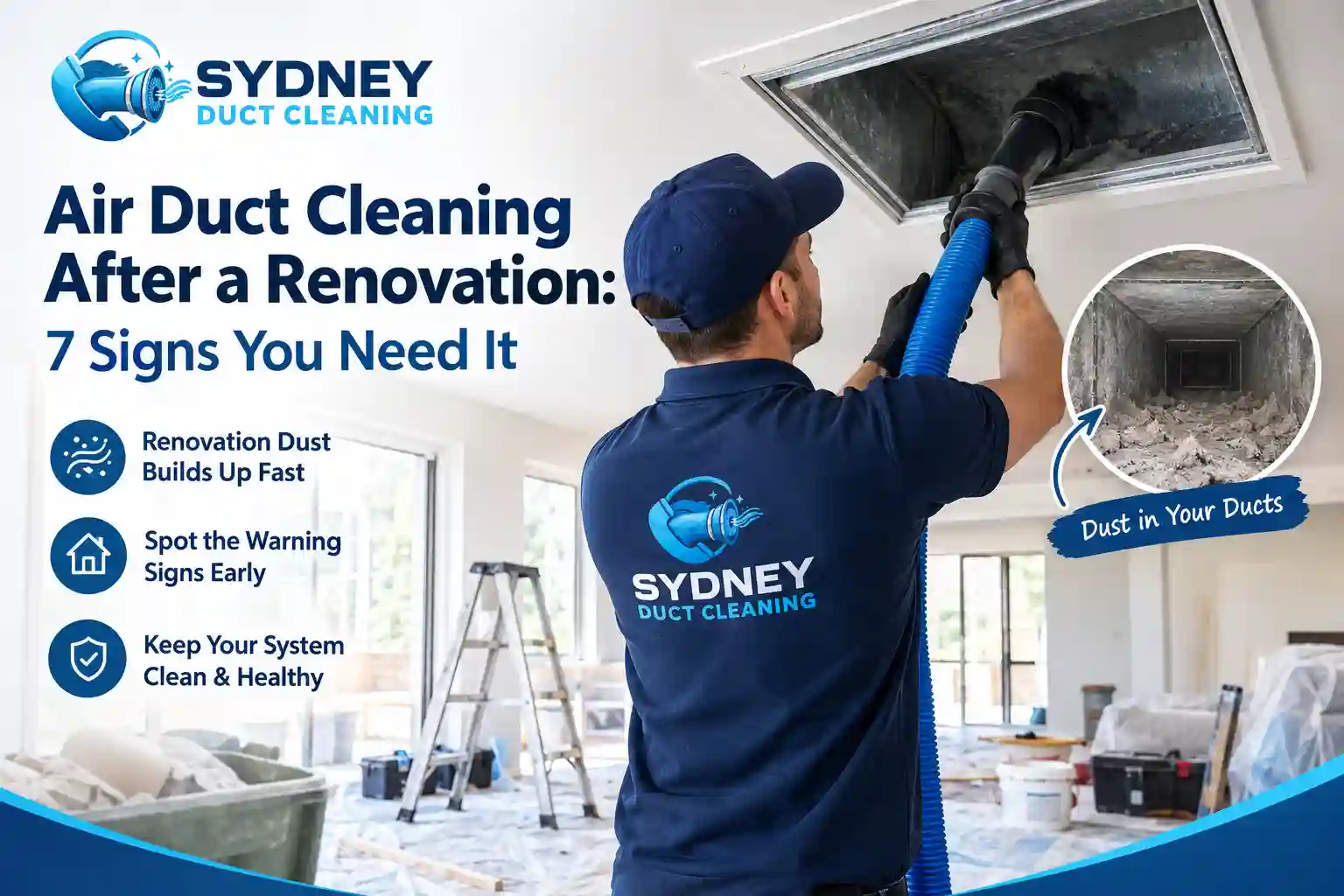
7 Signs You Need Air Duct Cleaning After a Renovation
- Dust returns within a day or two of cleaning. You wipe the shelves and it’s back almost straight away.
- Grit or debris around the vents. Look for fine powder, flakes or specks on or below the supply vents.
- The filter clogs much faster than normal. If it’s grey after a few weeks, a lot of dust is moving through the system.
- A dusty, gritty smell when the system starts. You may also notice it in the first minute or two of running.
- A lingering paint, glue or chemical smell. Fumes can hang around in the system long after the job is finished.
- Sneezing, coughing or irritated eyes at home. If symptoms ease when you’re out of the house, it’s worth checking the air quality.
- Weaker airflow or new noises. A heavy buildup can restrict airflow and make the fan work harder.
One sign on its own doesn’t prove your ducts are dirty, but two or three together usually do. Our air duct cleaning page explains how a proper inspection works.
Why a Wipe-Down Isn’t Enough
After a renovation, most people do the obvious things. They wipe the surfaces, mop the floors and replace the filter. That all helps, but it only deals with the dust you can see.
The dust inside the ducts is a separate problem. It sits on the walls of the ductwork, on the back of the vent covers and around the indoor unit. Because the system moves air through all of it, a small amount keeps working its way into your rooms. That’s why a house can feel dusty for months after a renovation even when it looks spotless.
Think of it like cleaning the carpet but not the vacuum. You can keep going over the surface, but the source of the problem is still inside the machine.
What to Do Straight Away
- Turn the system off if dusty work is still going on.
- Check the filter. If it’s coated in dust, wash it or replace it. If it’s a disposable type, replace it with one rated to AS 1324.1, the Australian standard for air filters in ventilation and air conditioning systems.
- Wipe the vent covers and return grille. This removes surface dust, but it won’t clear what’s inside the ducts.
- Don’t push a household vacuum into the vents. It can force dust deeper into the ducts and spread it around the room.
- Ask your builder what was done to protect the system. Whether the vents were covered tells you a lot about what’s likely inside.
If you need a replacement filter, the air filter replacement page covers the major brands.
Protecting Your Ducts Before the Next Renovation
Prevention is far easier than cleaning. If you’re planning work, ask your builder to do the following:
- Seal every supply vent in the work area with plastic sheeting and tape.
- Cover the return air grille in the same way, or turn the system off while the work is going on.
- Keep the system off during dusty work, like sanding, cutting and demolition.
- Remove the covers only after the dusty work and the final site clean are finished.
- Put in a fresh filter before you switch the system back on.
These steps cost the builder almost nothing and can save your ducts from a lot of dust.
Older Homes: Check for Asbestos First
This one matters in Sydney. If your home was built before about 1990 and the work disturbed old ceiling sheets, wall linings or ducting, ask your builder whether asbestos was present before anyone cleans or opens up the ducts. Disturbing it can release fibres, and it’s not a DIY job. SafeWork NSW has guidance on asbestos in the home.
What Professional Duct Cleaning Involves
A good technician starts with an inspection. They check the filter, the return grille, the vents and, where they can reach it, the inside of the ducts. Then the cleaning process usually looks like this:
- The system is switched off and the work area is protected.
- A strong vacuum unit is connected to the duct system to hold the ducts under negative pressure, so dust is drawn out and not pushed around the house.
- Brushes or compressed air tools loosen the dust from the duct walls.
- The vents, grilles and registers are cleaned.
- The filter is checked or replaced, and the indoor unit is inspected.
Look for a company that follows industry guidance from bodies such as NADCA and AIRAH, and that can show you before and after photos. For homes, see our residential air duct service. For shop fitouts and office refurbishments, where the dust load can be heavy, there’s a separate commercial air duct service.
What About Mould, Pests or Other Surprises?
Renovations sometimes uncover other problems. Opening up a ceiling can reveal old water damage, loose insulation or signs of pests near the ductwork. If you notice damp patches, a musty smell or droppings near a vent or duct run, mention it to your technician before the clean. They may need to inspect the ducts more closely or recommend repairs first.
Cleaning won’t fix a damaged or disconnected duct, so it’s worth having the whole run checked while the ceiling is accessible.
Other Vents That Collect Renovation Dust
Your ducted system isn’t the only place dust ends up. Bathroom and kitchen exhaust fans pull in dust during building work, and a clogged fan moves less air. If those fans were running during the renovation, our exhaust fan cleaning page explains what a proper clean covers.
If you also have a split system in a renovated room, its filter and indoor unit will have caught dust too. The split system cleaning service deals with that side of things.
When to Book the Clean
Timing matters more than most people realise. Book the duct clean after all the dusty work is finished and after the builders have done their final clean. If you clean the ducts too early, the next round of sanding or sweeping puts the dust straight back.
If you want the cleanest possible result, finish the work, have the house cleaned, replace the filter, then have the ducts done last.
A Simple Rule of Thumb
If the work made visible dust and the vents weren’t sealed, assume dust got into the ducts. If the work was light and the system was protected, a filter check is usually enough. And if you’re ever unsure, look at the filter. It’s the quickest honest indicator of how much dust has been moving through your system.
Once your ducts are clean again, our guide on how often to clean ducted air conditioning helps you keep them that way.