
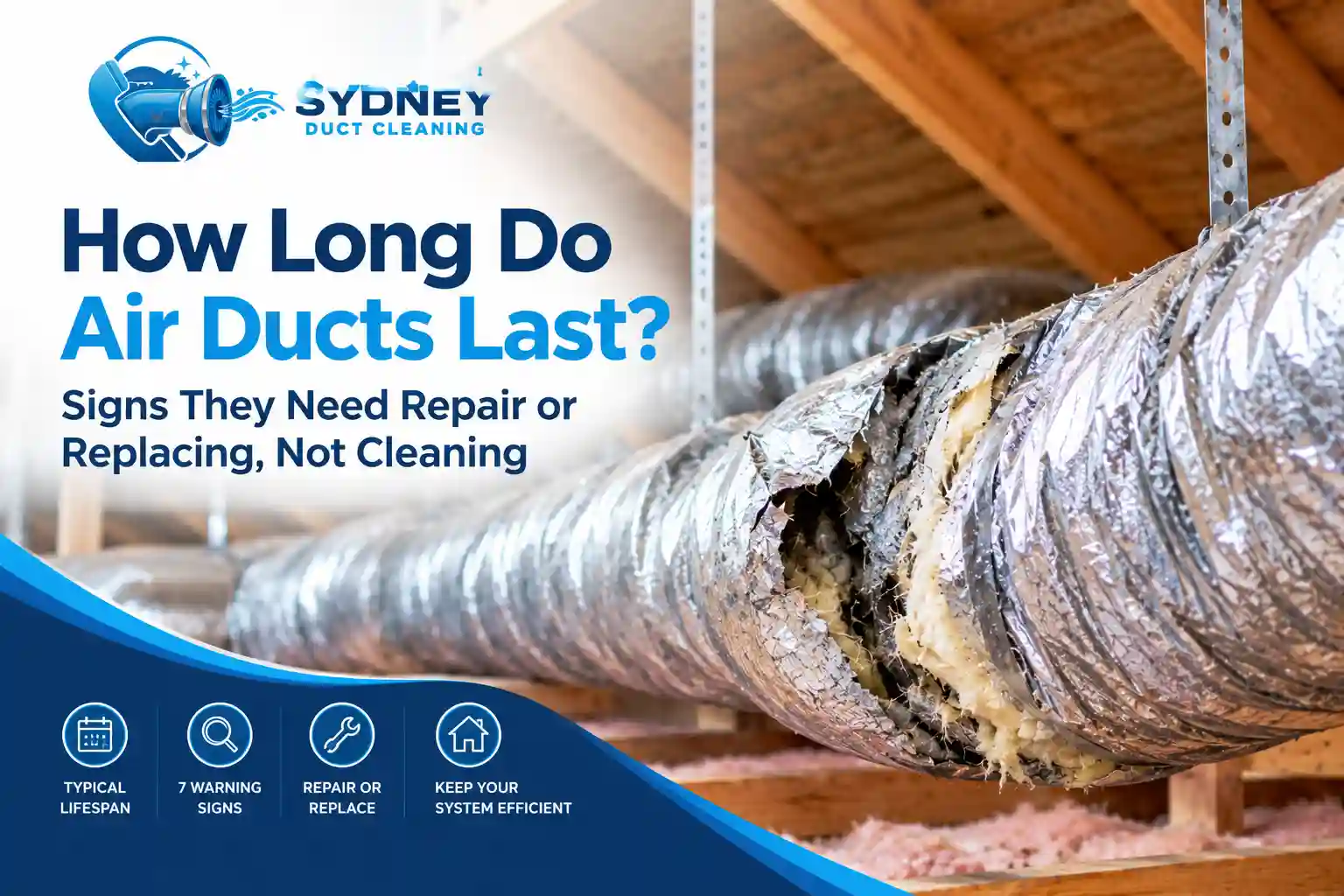
How long do air ducts last? In a typical Sydney home with ducted aircon, flexible ducts commonly last somewhere between 10 and 20 years, and rigid metal ducts can last 20 to 30 years or more. The real number depends on the roof space they sit in, how well they were installed and whether anything has damaged them.
The important point is what happens when ducts get old. Cleaning helps dirty ducts, but it can’t fix ducts that are crushed, torn, disconnected or falling apart. Knowing the difference stops you paying to clean something that actually needs repair.
How long do air ducts last in Sydney homes?
There’s no single figure, but general industry guidance gives a useful range. One US manufacturer’s guide puts flexible ductwork at roughly 10 to 20 years and notes that metal ductwork can last over 30 years. Other sources describe whole duct systems lasting around 15 to 25 years with good installation and care.
| Duct type | Typical lifespan | Where you’ll find it |
|---|---|---|
| Flexible insulated duct | Around 10 to 20 years | Most ducted aircon systems in Sydney roof spaces |
| Rigid sheet metal duct | Often 20 to 30 years or more | Main trunk lines and exposed runs |
| Duct board or panel duct | Varies with moisture and damage | Some older or custom installations |
Treat these as general ranges, not guarantees. A well-installed, undisturbed duct can outlast the range. A badly installed one can fail in half the time.
That is why the honest answer to how long do air ducts last is “it depends on the conditions.” A 12-year-old duct in a cool, undisturbed roof can be in better shape than a 6-year-old one that was crushed during a solar installation. Performance and condition tell you more than the date on the invoice.
Why roof-space ducts age faster
Most ducted systems in Sydney run through the roof space, which is a harsh place for any material. So how long do air ducts last up there? Often less than people expect, for these reasons:
- Heat. A roof space can be far hotter than the outdoor air in summer. Constant heat dries out insulation, tape and plastic over the years.
- Foot traffic. Electricians, solar installers, insulation fitters and pest controllers all go into roof spaces, and a duct is easy to step on or kink.
- Pests. Rats and possums chew and nest around ducts, and they can tear insulation sleeves.
- Moisture. Condensation on a cold duct in humid air soaks the insulation and can encourage mould.
- Installation quality. Sags, tight bends, loose clamps and poor sealing shorten the life of even good ducts.
Seven signs your ducts need repair or replacing
How long do air ducts last in your own home? Age is only part of the answer. These signs matter more:
- Weak airflow in one room or more. A crushed, kinked or disconnected duct can starve a room even when the unit is working properly.
- Rooms that never reach the set temperature. If the same rooms always lag, the duct feeding them may be damaged or leaking.
- Visible damage. Torn outer sleeves, sagging runs, flattened sections or sections that have come off their connections.
- Water stains or damp patches on the ceiling. They can signal condensation from a torn or soaked duct.
- A musty smell from the vents. Wet insulation or mould around a failing duct can cause it.
- Insulation fibres, grit or debris at the vents. They suggest a duct has broken down inside or around the connection.
- Rattling, flapping or hissing noises. Air escaping from a split or loose joint can make noise in the roof or ceiling.
One sign on its own doesn’t prove the ducts have failed, because a clogged filter or a faulty unit can cause some of the same symptoms. Several signs together are a strong clue.
Cleaning, repair or replacement: which one does your duct need?
| What’s wrong | Will cleaning help? | More likely fix |
|---|---|---|
| Dust or debris in sound ducts | Yes | Cleaning |
| Crushed or kinked section | No | Reposition, support or replace the section |
| Disconnected or leaking joint | No | Reconnect and reseal |
| Torn or soaked insulation sleeve | No | Repair or replace the duct |
| Mould on damp insulation | Rarely enough | Often replace the affected duct |
| Chewed or nested-in ducts | Partly | Clean up, then repair or replace damaged runs |
| Brittle, old or collapsing ducts | No, and it can make it worse | Replace |
| Poor layout or undersized ducts | No | Redesign by an installer |
Why cleaning a damaged duct can backfire
This is the part many people don’t hear. Flexible ducts have a thin inner liner and a delicate outer sleeve. If a duct is already brittle, torn or sagging, aggressive cleaning can make the damage worse. A responsible technician will inspect first, and will tell you if a duct is too far gone to clean safely.
That is also why an inspection should come before a clean. If you’d like to see what a proper inspection and clean involves, our air duct cleaning and residential air duct pages explain the process.
How to find out what condition your ducts are in
The question of how long do air ducts last is best answered by checking your own. Work through these steps:
- Start with the outlets. Compare the airflow at each vent. A big difference between rooms is a clue.
- Check the filter. A clogged filter can imitate duct problems, so rule it out first. Our air filter replacement page explains how.
- Note when problems started. If they began after roof work, solar installation or pest activity, a disturbed duct is more likely.
- Look at the ceiling. Stains, sagging or damp patches around vents are worth recording.
- Get the roof space inspected by a professional. A camera or physical check shows crushed, split or disconnected ducts that you can’t see from inside.
Please don’t go into the roof yourself. Roof spaces are hot, awkward and hazardous, with risks from falls through the ceiling, electrical wiring and, in older homes, asbestos.
Why Sydney homes reach the replacement stage sooner
A few local factors shorten the answer to how long do air ducts last in Sydney, so they’re worth watching:
- Hot, humid summers that bake roof spaces and create condensation.
- A boom in solar and roof work, which means many tradespeople have been in roof spaces.
- Possums and rodents, common in many Sydney suburbs.
- Systems installed in the 1990s and 2000s, which are now reaching the age where duct failure becomes more likely.
- Extensions that added ducts to older runs, sometimes with tight bends and long spans.
Repair or replace: what’s usually involved
Whether you’re asking how long do air ducts last or whether yours are past it, you don’t always need to replace the whole network. Often a damaged section can be replaced, a disconnected run reattached, and joints resealed. A fuller replacement makes sense when the ducts are widespread in poor condition, when mould has soaked into insulation, or when the layout never worked well.
If the aircon unit itself is also old, it’s worth considering both together, since the existing ducts may or may not be suitable for a new unit. A good installer or technician will assess whether the ducts can be kept.
Myths about duct lifespan
“Ducts last forever.” They don’t. Insulation, tape, plastic and joints all wear out, especially in a hot roof space.
“If air still comes out, the ducts are fine.” A duct can be partly crushed or leaking and still deliver some air. The room just gets less than it needs, and the system works harder to make up for it.
“Cleaning adds years to old ducts.” Cleaning removes dust and debris. It doesn’t repair a torn sleeve, reseal a joint or restore brittle material, and on a failing duct it can do more harm than good.
“Age alone decides when to replace.” Age is a rough guide, not a rule. When people ask how long do air ducts last, the best answer comes from inspecting them, not from a calendar.
“A new aircon unit means new ducts.” Not necessarily. Ducts that are sound, sealed and properly insulated can often stay, but they should be checked before the new unit goes in.
How to make ducts last longer
- Keep the filter clean. It protects the coil and reduces dust travelling through the ducts.
- Check after any roof work. Ask tradespeople to avoid stepping on ducts, and look for changes in airflow afterwards.
- Deal with pests early. The longer rodents or possums are in the roof, the more damage they do.
- Don’t store things on or against ducts. Weight and bending cause crushed sections.
- Fix leaks promptly. Water getting into insulation shortens duct life quickly.
- Get the roof space looked at every few years, or sooner if you notice any signs above.
The takeaway
So, how long do air ducts last? Often 10 to 20 years for flexible ducts and longer for rigid metal, but roof heat, pests, moisture and rough handling can shorten that. Age is a guide. Airflow, visible damage, damp and smells tell you more. Clean ducts that are sound, repair ducts that are damaged and replace ducts that are failing, and get an honest inspection before deciding which one you need.